What It Does
Core Capabilities
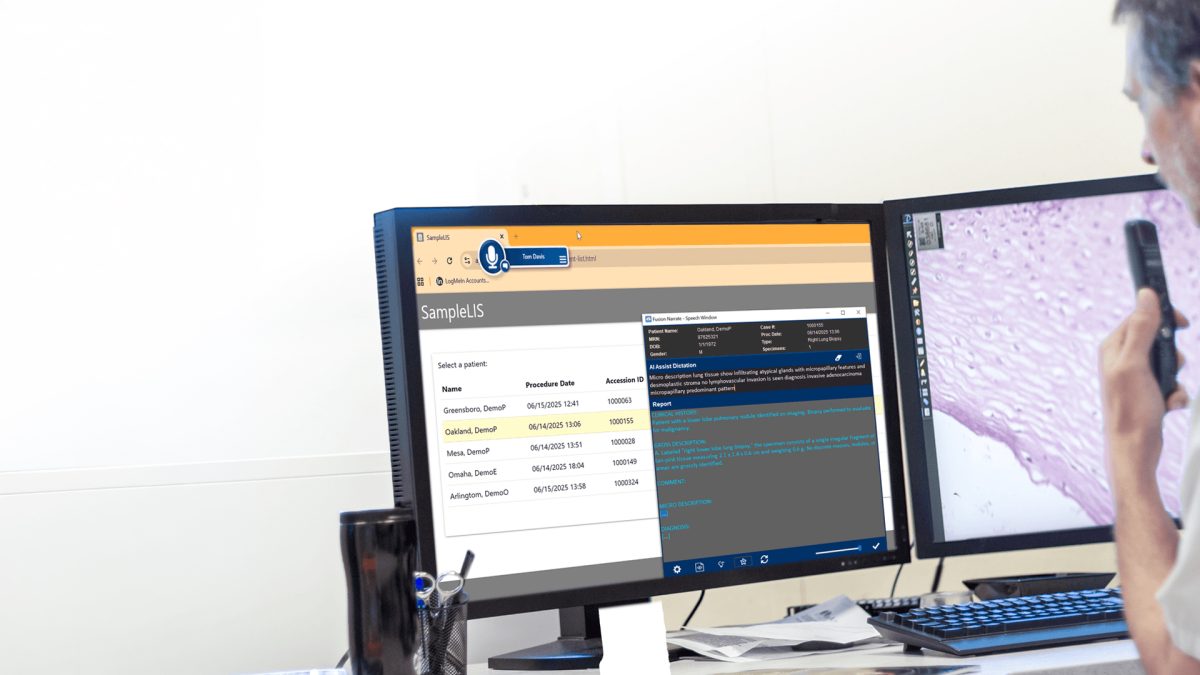
LIS Integration
Seamless LIS integration via HL7 or FHIR, reducing the need for manual LIS navigation during documentation.
Dictation Capture & Routing
Automatic dictation capture and routing into the correct LIS fields — no clicking, cursor placement, or manual positioning required.
Contextual Patient & Case Data
Contextual patient and case data pulled from third-party systems, giving grossers and pathologists the information they need without searching across multiple applications.
Digital Pathology Workflow
Streamlined digital pathology workflow, reducing steps and eliminating redundant tasks using documentation workflows refined through years of real-world clinical use.
AI Assist Dictation
AI Assist Dictation built in to support more natural dictation, automatically applying punctuation, formatting, and grammar corrections, reducing the need for manual cleanup.
Reduced Editing Effort
Reduced editing effort, allowing users to describe changes verbally instead of relying on complex selection and correction commands.
Simplified Template Completion
Simplified template completion, enabling users to dictate field data without jumping between template fields.
Integrated Quality Checks
Integrated quality checks, automatically flagging demographic inconsistencies, unexpected measurements, and missing specimen documentation.
Image-First Workflow
Image-first workflow, allowing pathologists to maintain focus on digital images while dictating without shifting application focus.

Built for Clinicians
Benefits for Grossers and Pathologists

Efficiency
Eliminates screen switching, manual LIS navigation, cursor placement, and start-stop dictation workflows.
Allows grossers and pathologists to focus on specimen assessment and diagnostic reporting rather than system mechanics.
Real-time streaming of dictation into the LIS accelerates case completion and turnaround times.
Integrated Workflow
Hub seamlessly bridges EMRs, the LIS, and third-party systems to deliver relevant patient and case data at the point of documentation.
Required information is surfaced automatically, reducing the need to manually retrieve data from multiple systems.
Reduced Cognitive Load & Fewer Mouse Clicks
Voice becomes the primary interface, enabling natural documentation without excessive clicking or navigation.
Reduced context switching improves focus, efficiency, and documentation accuracy.
The Bigger Picture
Why This Matters to Your Organization

Higher Throughput & Standardization
Consistent, accurate documentation improves report completeness and reduces rework.
Dictation flows directly to the correct LIS fields, eliminating dropped text, misplaced entries, and transcription delays.
Standardized workflows reduce variability and improve overall documentation quality.

Supports Existing Tools & Investments
Works with existing LIS and enterprise systems — no rip-and-replace or heavy custom interfaces required.
Built on HL7/FHIR standards for reliable, scalable, and future-proof integration.
Time Savings Across the Board
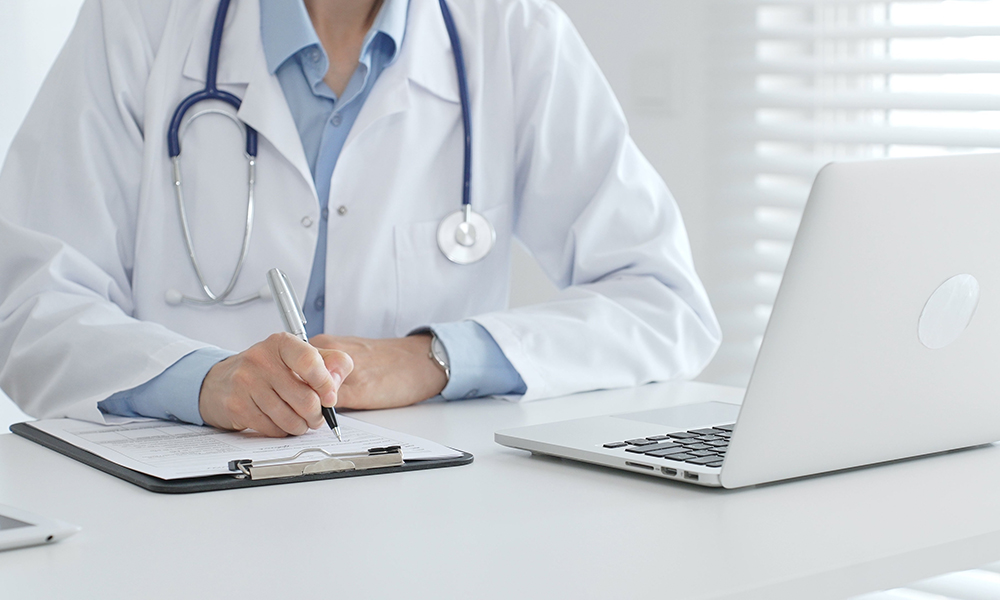
Staff spend less time on documentation mechanics and more time on high-value clinical work.
Grossers and pathologists reclaim hours previously lost to manual LIS navigation and multi-system lookups.
See It in Action
Ready for a Demo
Seeing Fusion Narrate Hub in action quickly shows how much faster and smoother pathology documentation can be — a live demo makes the impact immediately clear.